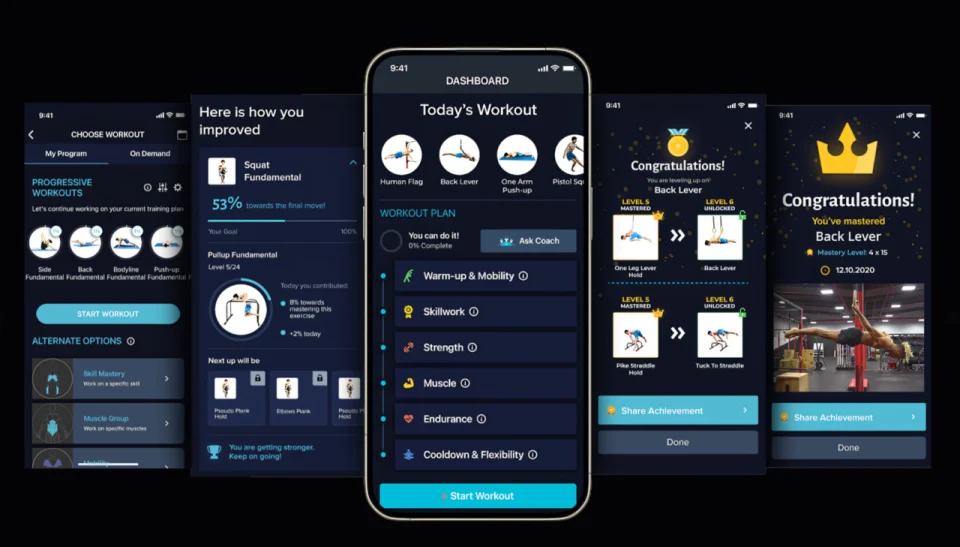


Customer
The targeting sheet nobody else will hand you.
Eight years of our own customers, measured — buyer records, exit surveys and roughly 5,250 logged objections — reduced to the three people who actually pay, and what each of them needs to hear.
Read the first card twice. The Injured Professional is 40% of our revenue, and injury-recovery buyers are roughly five times over-represented among our customers compared to our leads (directional — from customer-sample analysis, not a controlled experiment; we tell you which of our numbers are hard and which are directional, so you never overclaim on our behalf).
One piece of content aimed squarely at them can out-perform five aimed at “people who like fitness.”
The lines in quotes below are composite buyer voice — how each of these buyers talks, distilled from our customer research and exit surveys, not any single member’s words. Do not reuse them as customer testimonials. The real, attributable member quotes are in this kit and the rules.
🥇 The one to aim at
The Injured Professional
“Fitness betrayed my body — I need strength that won’t break down on me, so I’m never sidelined again.”
🥈 The skill hunter
The Skill-Seeking Professional
“I want to earn impressive skills through a logical system — if I made it, I know I earned it.”
🥉 The at-home parent
The Busy Parent Professional
“I’m losing myself to work and kids — I need to get strong at home and be the example they remember.”
The core customer: average age 36.8 · 85% male · 80% desk-based knowledge workers · 40% Europe, 32% North America.
What that means for your content
- Lead with the training-around-a-setback angle if your audience skews 35+ — it’s our strongest-converting message by a wide margin. (Careful framing: “train around it, build back strength” — never “heal / cure / fix your injury”. the rules.)
- The skill angle (first muscle-up, handstand, lever) is the hook for younger and calisthenics-native audiences.
- The at-home, 15-minutes, no-gym angle is the hook for parents.
What non-buyers object to — from 5,252 logged objections
Their doubts will show up in your comments section before your first sale does — so answer them in your content before they’re asked.
| Objection | Share | What it sounds like |
|---|---|---|
| Program fit | 32% | “Will it work for MY body / age / weight?” |
| Time & life | 28% | “I don’t have time for another program.” |
| Technical | 18% | App, devices, how the assessment works |
| Price | 15% | “Is it worth it vs what I do now?” |
| Already a customer | 7% | — |
✓ The single best objection-killer we have
The assessment makes the program fit you — there is no “too beginner”, because it starts exactly where you are. Our “New to calisthenics? This is for you” email — built entirely on that one idea — is among the highest-clicked emails we’ve sent at full list scale.
What content formats fit: dedicated reviews and head-to-head comparisons have been our strongest placements — with one honest caveat. What moves the needle in our own data is your page’s search rank and how specifically it matches the reader’s question, more than the format itself. Our best-converting placement anywhere is a ranked listicle.
A stale review quietly kills conversion — if your review shows old pricing or old screenshots, refreshing it is the highest-ROI hour you can spend. We’ll supply current facts and screenshots — just ask.
The three people who actually pay
We have a lot of users. We have three buyers. Aim at these and a small audience will out-earn a big one.
🥇 The one to aim at
The Injured Professional
40% of revenue · ~5× over-represented · age 35–45
“Fitness betrayed my body — I need strength that won’t break down on me, so I’m never sidelined again.”
- What sets them off: A tweak that will not settle, a scan, a doctor saying stop.
- What already failed them: Physio helped and then stopped helping. The gym made it worse. YouTube was a lottery.
- The objection: “Will this hurt me again?”
- What kills it: The assessment starts them below the level that hurt them — and says so.
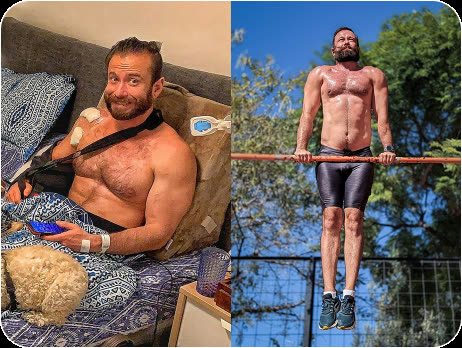
- Imagery that works: Member before-and-after photos showing visible strength and physique progress.
“I herniated three discs and ended up on the floor for two months.” — Gareth, 46, financial planner
🥈 The skill hunter
The Skill-Seeking Professional
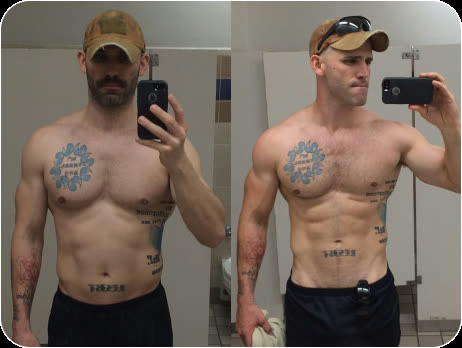
30% of revenue · ~3× over-represented
“I want to earn impressive skills through a logical system — if I made it, I know I earned it.”
- What sets them off: Seeing someone do it and realising they cannot.
- What already failed them: Generic programmes with no path, and no way to know what level they are on.
- The objection: “Am I going to plateau again?”
- What kills it: A visible ladder with their feet on a rung and the next one in reach.
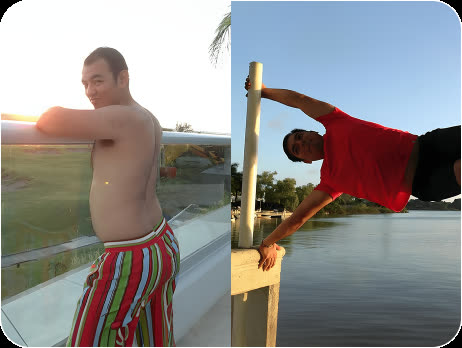
- Imagery that works: A member’s before photo on holiday, and the same member later holding a human flag on a post by a lake.
“You can’t fake it to a muscle up. If you made it, you know you earned it.” — Kon, 26
🥉 The at-home parent
The Busy Parent Professional
25% of revenue · ~2× over-represented
“I’m losing myself to work and kids — I need to get strong at home and be the example they remember.”
- What sets them off: Not being able to play without paying for it the next day.
- What already failed them: Gym memberships they could not get to. Programmes that assumed an hour.
- The objection: “I do not have the time.”
- What kills it: It works at home, around them, and is useful on a ten-minute day.
- Imagery that works: A member training at home with children in frame.
“Since I got my twin boys I stopped all activities — they take all of your time.” — Igor, 39
And the seven behind them
Those three are the buyers. They are not the whole audience. Seven more types make up most of the traffic and a small slice of the revenue — worth knowing, because if your audience is mostly these, your numbers will look different and that is normal.
The Pure Muscle Builder
28% of volume, 8% of revenue
Wants size. Will convert, but on aesthetics rather than capability.
The Weight Loss Warrior
16% / 6%
Here for fat loss; stays for how they feel.
The Strength Seeker
12% / 4%
Wants to be stronger, no specific skill in mind.
The Comeback Beginner
8% / <1%
Returning after years away. High volume, low spend, but the warmest humans you will meet.
The Health Optimiser
5% / ~1.5%
Longevity-minded; responds to the joint and bone-density material.
The Mobility Seeker
4% / <1%
Came for stiffness, not strength.
The Skill Explorer
3% / <1%
Curious about one trick rather than a system.
Volume and revenue splits from our internal avatar model. Treat them as the shape of the audience, not as precise forecasting figures.
Why they came — in their own words, counted
🔴 You may have seen an older “46% wanted aesthetics” split quoted in our own marketing. It has no dataset behind it and we no longer use it. The numbers above are the sourced ones.
And why people do not buy
Who they are, measured
The last two matter most. Nearly three quarters came from lifting — they are not beginners, they are people whose training stopped working. And shoulder and wrist are three quarters of all reported pain: the desk, the mouse, the years. If your audience sits at a computer, you already have the angle.
The journey they are on
Almost every member walked the same road before they found us. Your content lands hardest when it meets them at the step they are actually on.
- Active once
Sport, or just a body that worked without being thought about.
- Life changed
A job, children, a move. Training became the thing that got dropped.
- The decline
Stiffness, aches, a photo they did not like.
- The gym attempt
Back to what they knew. Weights, or an app full of burpees.
- Injury or frustration
It hurt, or it simply stopped working. This is the bottom.
- The search
YouTube, apps, programmes. Nothing fits a body like theirs today.
- They find this
An assessment that starts where they are, not where a programme assumes they are.
THE FACTS, FOR YOU OR YOUR AI — targeting
- Aim at: 35–45, desk-based, trained before, something went wrong.
- The highest-converting single angle is injury and rebuild — roughly 5× the average conversion.
- Price is only 15% of objections. Fit is 32%. Lead with fit.
- Shoulder and wrist are 73% of reported pain — the desk-worker angle is not a guess.
- Average buyer age is 36.8, about 85% male, across 47 countries.
- 🔴 Never promise rehabilitation or pain treatment. Speak about training around a body that has history — never about fixing an injury.